FIRST ROBOTICS // CRESCENDO 2024

2024 COMPETITION ROBOT

Fast swerve robot built for rapid note cycling, adjustable speaker shots, amp scoring, and compact endgame integration.

PROGRAM SNAPSHOT

SYSTEM MASS

125 LB COMPETITION ROBOT

DRIVE SPEED

15 FT/S FREE SPEED

ELEVATOR CYCLE

0.2 S FULL TRAVEL

FIRST ROBOTICS // CRESCENDO 2024

2024 COMPETITION ROBOT

Fast swerve robot built for rapid note cycling, adjustable speaker shots, amp scoring, and compact endgame integration.

A 125 lb competition robot built around full-field mobility, under-the-bumper note acquisition, a variable-angle shooter, a fast two-stage stinger, an amp grabber, and a winch-style linear climb with trap capability.

MISSION

Build a robot capable of fast note acquisition, repeatable speaker scoring from multiple distances, controlled amp placement, and endgame climbing without sacrificing packaging discipline or serviceability.

ROLE

Mechanical contributor and drive coach responsible for robot testing, subsystem integration, and assembly support. Integrated the stinger and wrist with the shooter system, contributed to climb development, and supported the build of the full robot.

SYSTEM

Swerve chassis, under-bumper ground intake, double vertical flywheel shooter, gear-rack hood pivot, belt-driven two-stage stinger, amp wrist and grabber, and winch-style linear climb.

CONSTRAINTS

125 lb weight limit, compact 27 in x 32 in frame, dense subsystem stacking, fast scoring cycle demands, low-CG packaging, and the need to support speaker, amp, trap, and climb functions in one architecture.

2024 COMPETITION ROBOT

TOOLS USED

SolidWorksCNCJavaSwerve packagingMechanism prototyping

VALIDATION / TESTING

Two physical limit switches and motor encoder feedback for elevator motion

Limelight-based aiming support for the shooter

Limit-switch based note detection on the amp grabber

Repeated subsystem testing under match-style scoring and climb conditions

High-Speed Swerve Architecture

Drivetrain packaging centered on low CG, serviceable electronics, and clear top-side volume for scoring mechanisms.

SYSTEM

High-Speed Swerve Architecture

SDS MK4i L2 | 15 ft/s free speed | 1/8 in bellypan | low-mounted controls

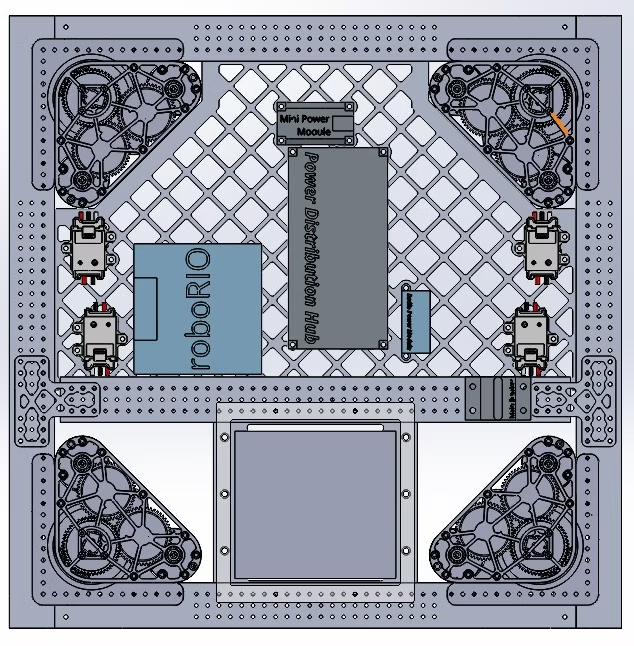
The drivebase used four SDS MK4i modules with L2 reduction for full-holonomic mobility at 15 ft/s. The 27 in by 32 in chassis used an aggressively pocketed 1/8 in bellypan, with the battery laid flat for lower center of gravity and more space above for the shooter, stinger, and controls. The RoboRIO, PDP, and swerve controllers were packaged low on the bellypan for clean integration and service access.

Shooter architecture was built around adjustable launch geometry instead of a fixed release angle, allowing more flexible scoring positions.

SCORING

Variable-Angle Shooter System

8 x 4 in Colsons | dual Kraken X60 | 9:1 transfer | 81:1 hood

The shooter used eight 4 in diameter Colson wheels, 1 in wide, driven by two Kraken X60 motors for high linear exit speed. Several sets of 2 in flex rollers transferred notes from the intake using a NEO 550 with 9:1 reduction through HTD 5M 9 mm pulleys and bevel gears. A 9 in radius gear-rack hood, driven by a Falcon 500 through an 81:1 reduction, adjusted launch angle in real time for speaker shots from varying distances. Wet-sanded polycarbonate sheets guided the note with minimal friction through the chamber.

Protected under-bumper intake with a direct transfer path into the scoring system.

TRANSFER

Under-Bumper Note Intake

5 x 1.625 in rollers | NEO 550 | 5:1 reduction | 1/8 in side plates

The intake mounted directly as part of the chassis perimeter and used five sets of 1.625 in horizontal rollers for immediate note pickup on contact. A NEO 550 with 5:1 reduction drove the rollers through HTD 5M 9 mm pulleys and 20DP spur gears, while 1/8 in aluminum side plates housed and protected the roller and gearbox geometry. The low-profile under-bumper layout prioritized speed, simplicity, and clean transfer into the shooter path.

AMP

Stinger, Wrist, And Amp Grabber

13 in stroke | Falcon 500 | 3:1 stinger | 108:1 wrist | note detect

The two-stage stinger raised the wrist and amp grabber through a 13 in stroke, driven by a Falcon 500 through a 3:1 20DP gear reduction. The carriage used a rectangular frame with an overextended geometry for additional reach, and an Igus cable chain routed wiring cleanly along the structure. At the top, the wrist used a NEO 550 driving a 108:1 gearbox and 54T #25 sprocket through bevel gears packaged into a narrow carriage around a large-diameter turntable. The amp grabber used 1.625 in double horizontal rollers driven by a NEO 550 with 3:1 reduction, with hardstops and a limit switch for note control at varying wrist angles.

Linear climb package built for hook deployment, fast winch travel, and integrated trap scoring support.

ENDGAME

Winch-Style Linear Climb

24 in travel | dual NEO 550 | 81:1 winch | 1 in drum | trap capable

The endgame used a linear winch climb that deployed hooks upward using a constant-force spring as the winch released along a trapezoidal linear rail. Once engaged with the chain, the winch retracted the hooks down to the base of the robot to lift the machine into the air. The structure tied the rails into the robot truss and chassis through side plates, a crossbar, and plate-standoff winch mounts, while UHMW carriages guided the hooks. Two NEO 550 motors drove an 81:1 gearbox to a 1 in OD drum, moving 24 in in about 2 seconds. Combined with the stinger and grabber, the climb also supported trap scoring.

VIDEO PREVIEW

External Project Videos

A few external videos that show the project in motion beyond the embedded local media on this page.

Robot Reveal