Mechanical lead for a field-tested rover program spanning chassis layout, manipulator redesign, thermal packaging, subsystem integration, and deadline-driven validation.
Led the mechanical program for a competition rover where drivetrain reliability, arm capability, electronics packaging, science integration, and operator readiness all had to work as one system. The season centered on reducing weight, improving terrain performance, redesigning underperforming subsystems, and building toward a more credible URC field platform.
MISSION
Design and field a rover for the University Rover Challenge capable of completing a realistic set of Mars-inspired tasks, including science sampling and onboard analysis, tool retrieval, mock equipment servicing, and autonomous search and traverse. The broader goal was to build a credible mock Mars rover system that could perform reliably across varied operational demands.
ROLE
Mechanical lead responsible for team direction, subsystem architecture, design reviews, CAD workflow, packaging decisions, integration planning, and validation across the rover. Worked across drivetrain, suspension, arm, science mounting, and new mechanism development while coordinating the mechanical team through design and execution. The mechanical team consisted of 12 members.
SYSTEM
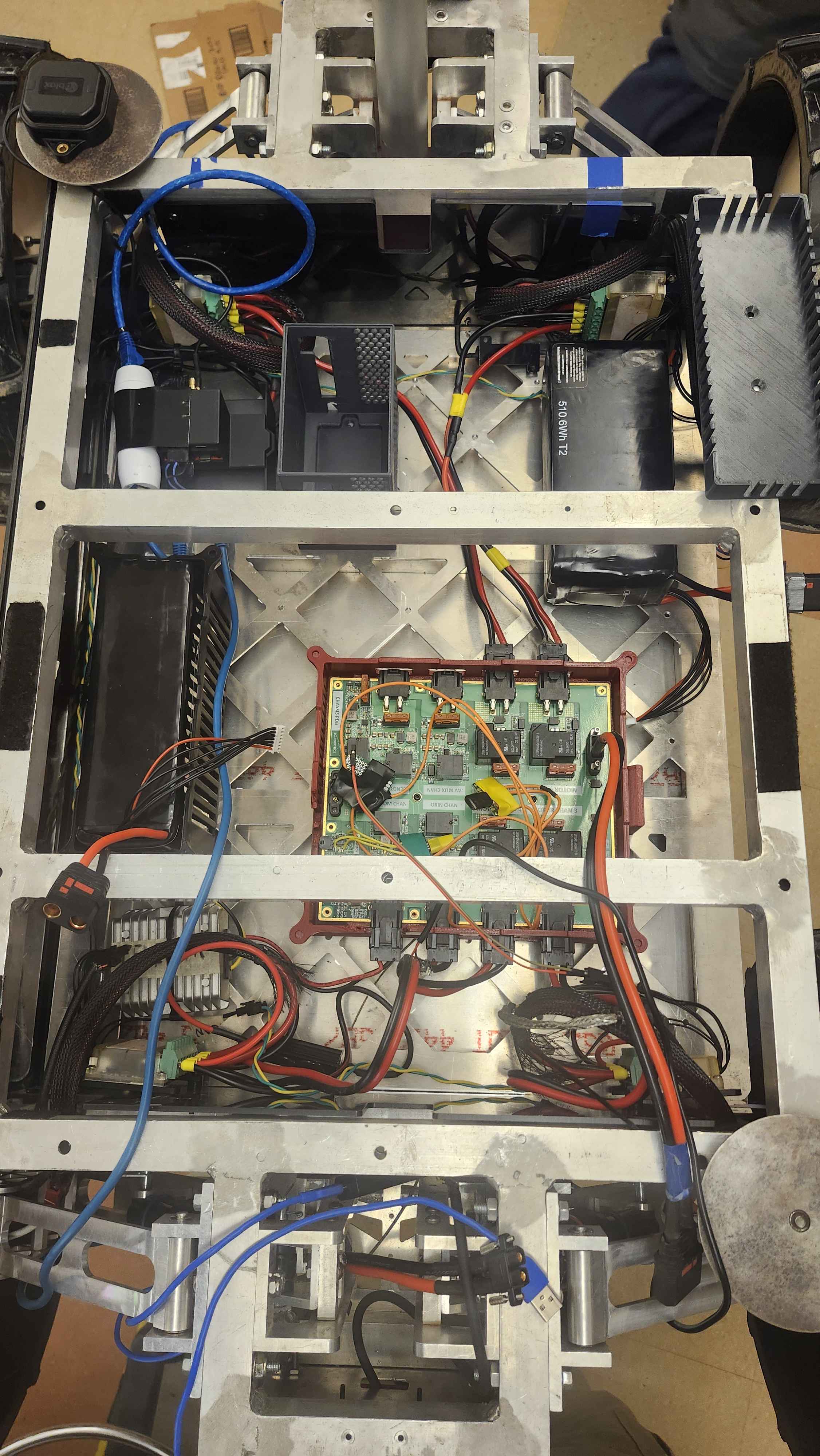
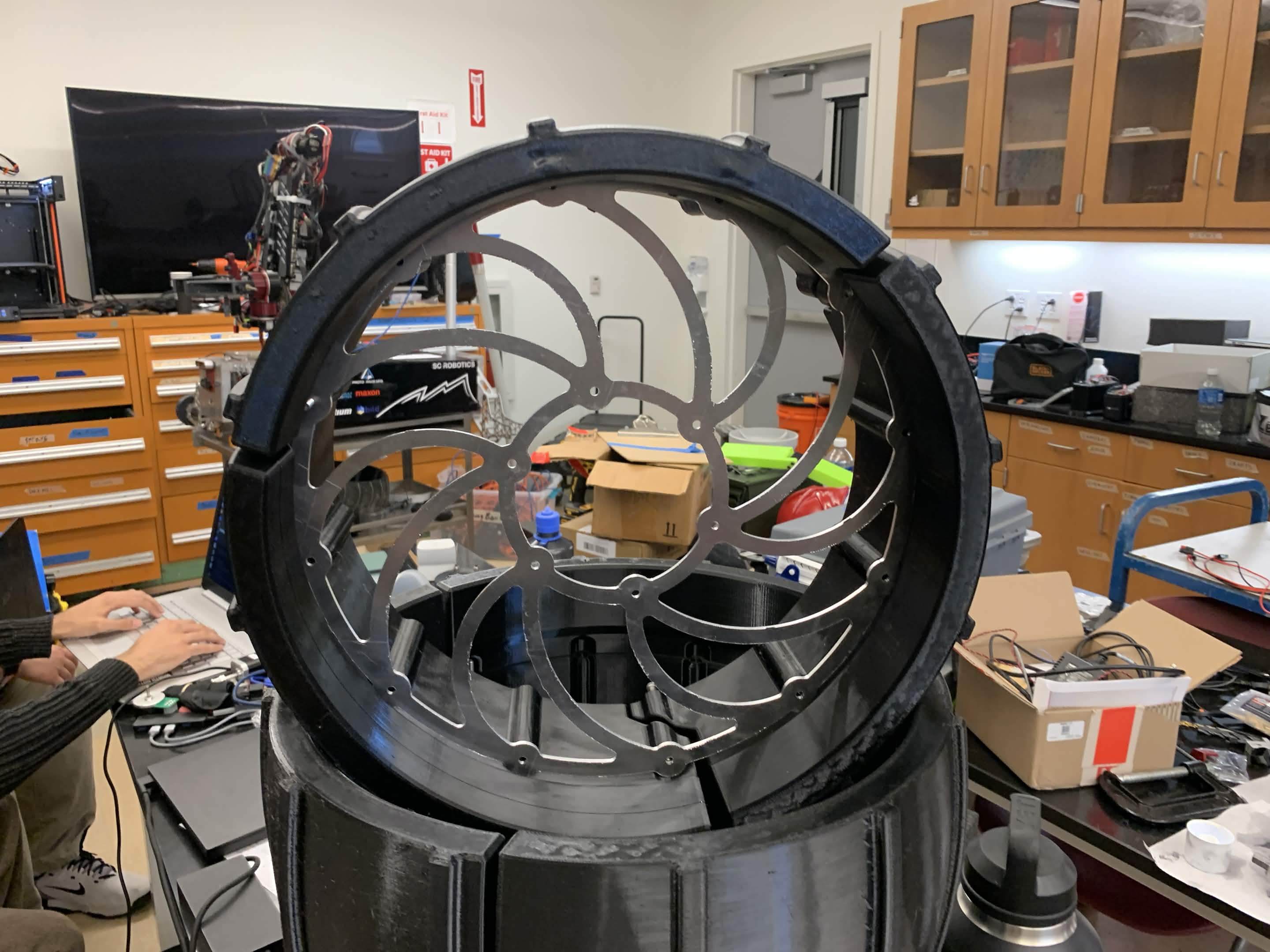
Welded aluminum rover chassis, suspension and drivetrain, custom TPU wheel redesign, existing six-axis arm with gearbox and homing upgrades, new lightweight arm architecture, science payload packaging, modular electronics layout, and cross-team integration with electrical, autonomy, and testing.
CONSTRAINTS
The project was shaped by aggressive competition deadlines, limited iteration cycles, subsystem interdependence, and the need to balance performance, reliability, and manufacturability across the full rover. Key constraints included electrical packaging, thermal considerations around enclosed electronics and power systems, cross-team integration with electrical, software, autonomy, and science, and staying near the competition weight limit without compromising durability or serviceability.