FIRST ROBOTICS // CHARGED UP 2023

2023 COMPETITION ROBOT

Manipulator-first swerve robot built for cone and cube handling, multi-level scoring, and compact arm packaging within a 30 in x 30 in frame.

PROGRAM SNAPSHOT

DRIVE SPEED

17 FT/S FREE SPEED

ARM TRAVEL

80 DEG RANGE

COUNTERBALANCE

6 x 10 LB CONSTANT-FORCE SPRINGS

FIRST ROBOTICS // CHARGED UP 2023

2023 COMPETITION ROBOT

Manipulator-first swerve robot built for cone and cube handling, multi-level scoring, and compact arm packaging within a 30 in x 30 in frame.

A 125 lb competition robot built around full-field mobility, rack-and-pinion arm motion, and controlled game-piece transfer. The architecture combined swerve drive, a rotating ground intake, a roller grabber, piston-assisted extension, and a landing-gear-style lead screw climb.

MISSION

Create a drivetrain and arm system capable of scoring across multiple node heights while handling both cones and cubes with repeatable mechanism behavior and manageable service demands.

ROLE

Mechanical contributor focused on drivebase architecture and end-effector packaging for a manipulator-heavy robot.

SYSTEM

Swerve chassis, rack-and-pinion pivot arm, piston-assisted extension, rotating ground intake, roller grabber, and landing-gear-style lead screw climb.

CONSTRAINTS

Broad scoring envelope, two different game-piece geometries, repeated impacts on the intake and arm, tight chassis packaging, and the need to stay serviceable throughout competition.
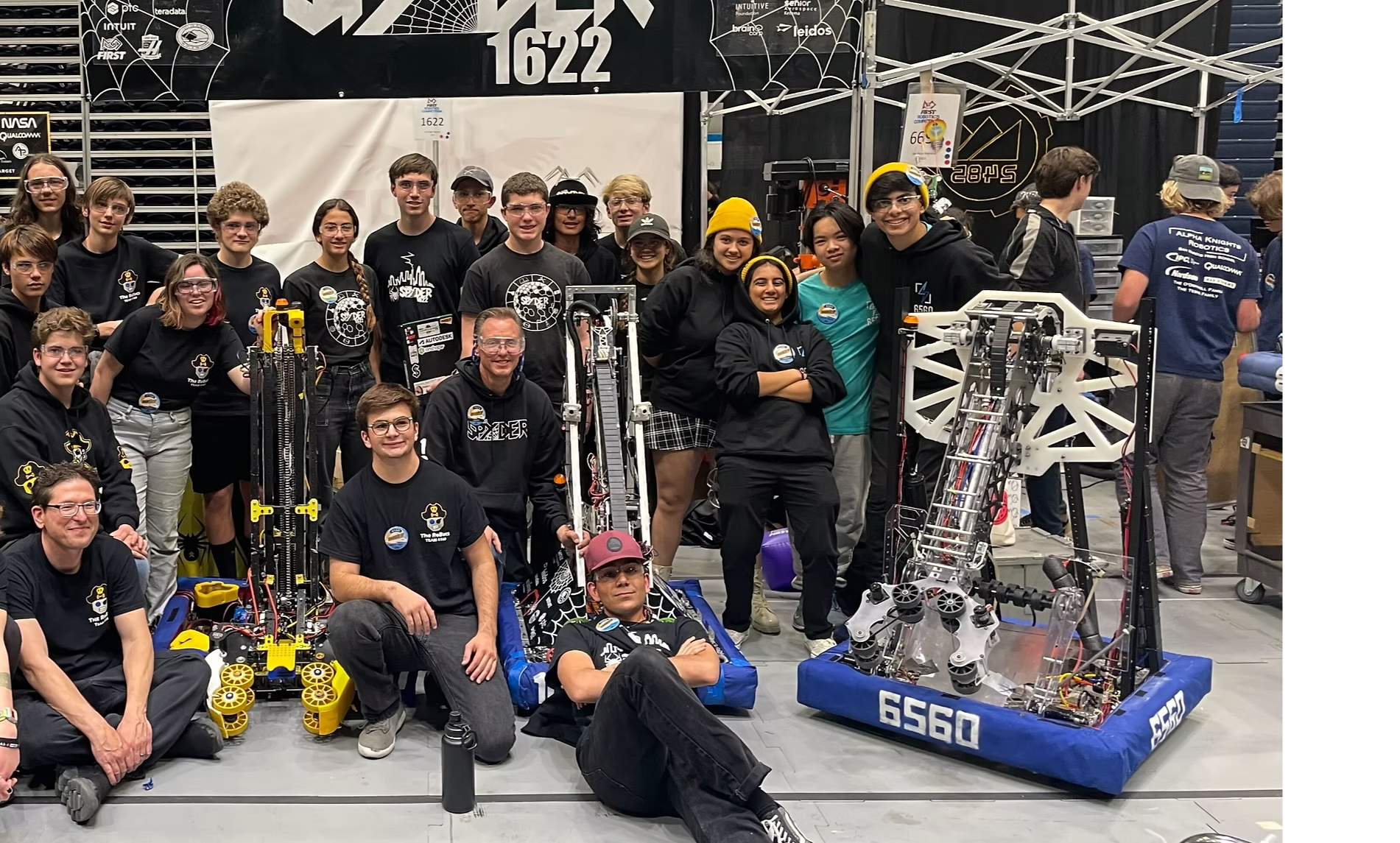
2023 COMPETITION ROBOT

TOOLS USED

SolidWorksPneumaticsCNCMechanism packagingFEA-informed design

VALIDATION / TESTING

Impact-resistant side-plate and standoff packaging for the arm and intake

Motor encoder and physical limit-switch feedback for arm motion control

Current-based acquisition confirmation on the grabber

Repeated mechanism testing under match-style operating conditions

Drivebase architecture supporting holonomic motion and manipulator-heavy packaging.

SYSTEM

Drivebase Packaging And Mobility

SDS MK4i L2 | 17 ft/s free speed | 30 in x 30 in chassis

The drivebase used four SDS MK4i swerve modules with L2 reduction for full-holonomic mobility at 17 ft/s. The 30 in by 30 in chassis used an aggressively pocketed 1/8 in bellypan, with the battery offset to one side to balance center of gravity and the RoboRIO and swerve motor controllers packaged low for service access and manipulator clearance.

Primary arm motion system designed for compact packaging and controllable torque requirements.

ARM ARCHITECTURE

Rack-And-Pinion Arm With Passive Counterbalance

NEO 550 | 45:1 reduction | 80 deg travel | 6 x 10 lb springs

The pivot arm used a NEO 550 driving a 45:1 gearbox and 36T #25 sprocket to move a chain-fastened arc rack through 80 degrees of motion in about 1.2 seconds. Six 10 lb constant-force springs were packaged near the pivot to counterbalance the arm load, reducing actuator demand while keeping the structure compact. An inner stage housed inside the arm extended with a piston for extra scoring reach.

Cone And Cube Intake Strategy

Rotating intake architecture built to support multiple game-piece geometries.

GAME PIECE CONTROL

Cone And Cube Intake Strategy

2 x NEO 550 pivot | 9:1 pivot | 3:1 roller drive | PC side plates

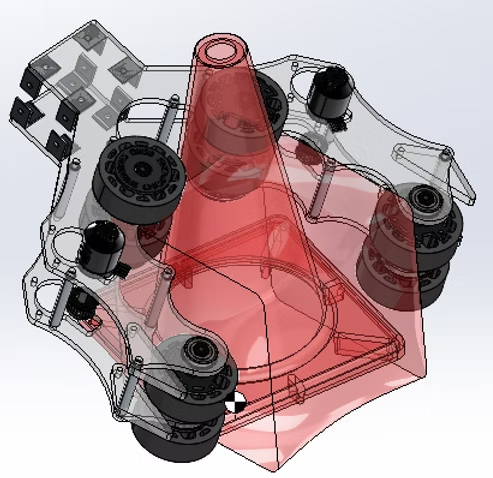
The ground intake mounted directly to the chassis and rotated outward to deploy. Two NEO 550 motors drove a 9:1 pivot transmission for intake rotation, while a separate NEO 550 powered the 2 in rollers through a 3:1 reduction. The mechanism was designed to grab the cone flange, flip cones into the grabber through pivot motion, or pass cubes directly into the intake path. PC side plates and standoffs protected the transmission while adding rigidity.

Roller Grabber And Extension Package

End-effector and extension package tuned for reach, retention, and repeatable control.

END EFFECTOR

Roller Grabber And Extension Package

8 x 3 in flex wheels | dual NEO 550 | 5:1 reduction | current sensing

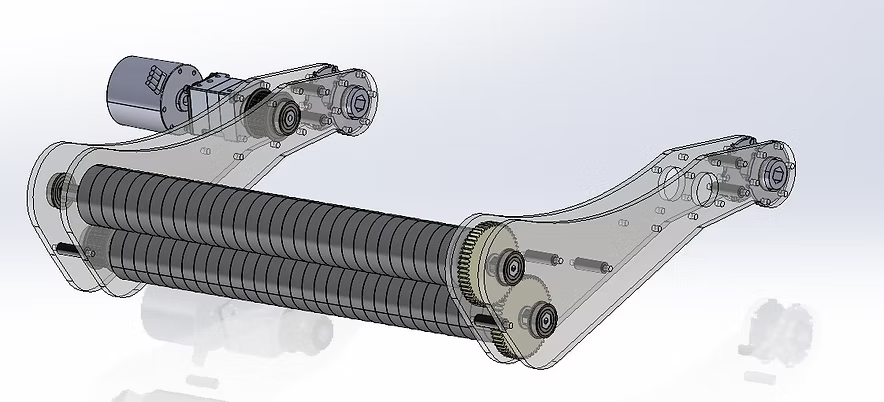
The grabber used eight staggered 3 in flex wheels, each 1 in tall, to handle both intake and outtake of cones and cubes. Two NEO 550 motors with a 5:1 reduction powered the wheels through HTD 5M 9 mm pulleys, while a spring-loaded alignment system increased tolerance during cone acquisition and scoring. Current control was used to detect when a game piece had been acquired.

Lead-screw climb built to deploy downward, guide onto the platform, and preserve space for multi-robot balancing.

ENDGAME

Landing-Gear Lead Screw Climb

Lead screw climb | NEO 550 | 81:1 screw drive | 9:1 wheel drive

The endgame used a landing-gear-style lead screw climb that actuated downward onto the floor before driving onto the charge station to give us extra contact points for manueverability and shift our center of gravity to hang off the charging station. The structure used a plate-and-standoff layout mounted directly to the chassis and truss through a nylon block, with a linear rail guiding the lead screw motion. A NEO 550 with an 81:1 reduction powered the lead screw, while a NEO motor with a 9:1 reduction powered the landing-gear wheels.

VIDEO PREVIEW

External Project Videos

A few external videos that show the project in motion beyond the embedded local media on this page.

Event Recap

2023 Robot Reveal

Offseason Robot Reveal